Children Book Writing Tips for Engaging Stories
Key Takeaways
- Focus on universal themes that resonate with children (friendship, bravery, emotions, and belonging), and create stories that feel relatable and timeless.
- Never underestimate young readers; they are perceptive and intelligent.
- Children’s stories are meant to be read aloud, so the flow, musicality, and word choice matter as much as the message.
- Let illustrations tell part of the story because the text doesn’t need to explain everything. Leave space for the illustrator to bring the story to life visually.
Writing for children is often misunderstood as an “easy” entry point into the world of literature. There’s a common myth that because the word count is lower and the vocabulary is simpler, the work is less demanding.
In reality, writing a children’s book is an exercise in extreme precision. Why? It’s because every word must earn its place, every sentence must sing, and every page must hold a child’s wandering attention.
So, if you’re an aspiring author, you aren’t just writing a story; you’re building a foundation for a child’s imagination. To do this successfully, you need more than just a good idea, indeed. You need a strategy. Here are the essential children book writing tips to help you turn a spark of inspiration into a beloved classic.
Why Writing for Children is a Unique Challenge
Writing for children is unique because you’re writing for two audiences simultaneously: the child who listens and the adult who buys (and reads) the book. Unlike adult fiction, where a reader might give a slow-burning plot fifty pages to get interesting, a child will check out in fifty seconds if they aren’t engaged.
Children are also the most honest critics in the world. They don’t care about literary awards or complex metaphors. What they care about is how a story makes them feel. To write for them, you must strip away your adult cynicism and reconnect with the sense of wonder, fear, and curiosity that defines childhood.
Furthermore, you must navigate the strict constraints of age-appropriate vocabulary while still delivering a narrative that feels deep and meaningful.
Essential Children Book Writing Tips for Beginners
To succeed in this field, you need to master the technical craft while maintaining a playful spirit. Then check out these children book writing tips to build your story from the ground up.
Finding Your Story’s Heart: Themes that Resonate
Every great children’s book has an “anchor”. It is a central theme that stays with the reader long after the book is closed. You don’t need a complex philosophical argument. Instead, look for universal experiences.
Common themes that resonate with children include:
- Independence: Learning to do something alone for the first time.
- Belonging: Finding where you fit in a big world.
- Resilience: Handling a “no” or overcoming a small but significant obstacle.
- Emotions: Understanding big feelings like anger, sadness, or joy.
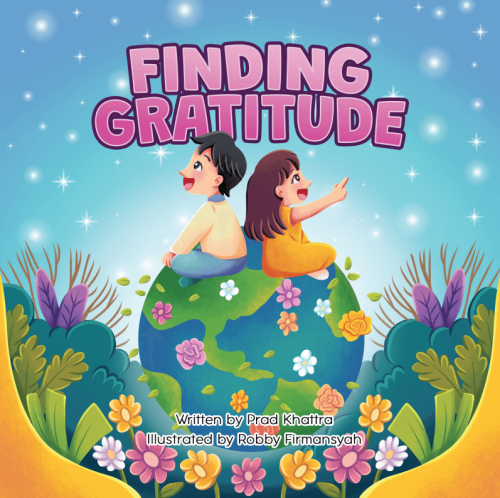
Finding Gratitude is a gentle picture book that shows how a clear emotional theme can resonate with both children and adults. It’s a great example of how focusing on simple, meaningful moments can give a story lasting impact.
When choosing a theme, you also need to avoid being “preachy”. Yes, that’s because children can smell a moral lesson from a mile away, and they usually find it boring. Instead of telling them that “sharing is good”, just show them a character who discovers that playing together is more fun than playing alone.
Children Book Writing Tips for Creating Memorable Characters
Characters in children’s books need to be proactive, too. In many amateur manuscripts, things happen to the character, right? In professional books, the character also drives outcomes.
To create a character kids will root for, you can use these children book writing tips:
- Give them a clear want: Maybe they want a cookie, or maybe they want to fly to the moon.
- Give them a recognizable flaw: A character who is perfect is complex to relate to. A character who is a little bit clumsy or a little bit afraid is much more endearing.
- The “Kid-in-Charge” rule: In children’s literature, the child (or child-like animal) should be the one to solve the problem. If a parent or teacher steps in to save the day, the story loses its magic for the young reader.
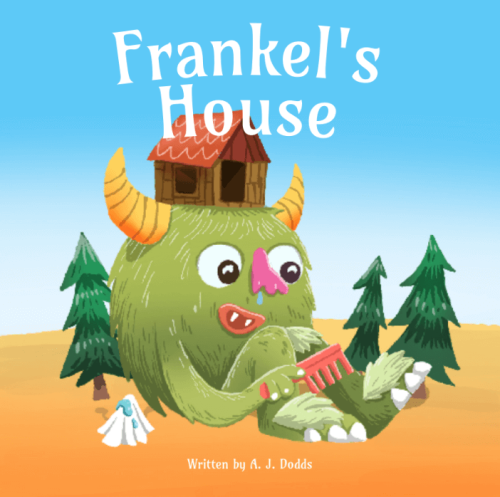
In Frankel’s House, the main character explores emotional ups and downs in a way that young readers easily understand — a great illustration of how relatable feelings and clear character arcs can make your story resonate.
Children Book Writing Tips: Mastering Rhythm and Language
Children’s books are meant to be read aloud. This means the “musicality” of your prose is crucial. Even if you aren’t writing in rhyme, your sentences should have a rhythm that feels natural to the ear.
- Read it aloud: If you stumble over a sentence, the parent reading it at 7:00 PM after a long day of work will stumble too.
- Use “Crunchy” Words: Don’t be afraid of interesting words. Children love the sound of words like “bamboozled,” “splat,” or “shimmer.” As long as the context or the illustration explains the meaning, a “big” word can be a delight.
- Avoid “Purple Prose”: Please keep your descriptions lean. You don’t need three adjectives to describe a tree when the illustrator is going to draw the tree anyway.
Children Book Writing Tips for Different Age Groups
“Children’s Books” is a broad category. To write effectively, you must know which specific age group you are targeting, as the “rules” change significantly. Take a look at this table to get more details!
| Category | Age Range | Word Count | Focus |
| Board Books | 0-3 years | 0-100 words | Simple concepts, daily routines, tactile. |
| Picture Books | 3-7 years | 400-800 words | Strong plot, heavy illustration, read-aloud. |
| Early Readers | 5-8 years | 1,000-2,500 words | Simple sentences for kids learning to read. |
| Chapter Books | 7-10 years | 4,000-15,000 words | More complex subplots, fewer illustrations. |
Matching your tone and vocabulary to the correct category is one of the most important children book writing tips for getting published.
Embracing the Power of Illustrations
One of the hardest things for new authors to do is “leave room” for the artist. Do you also agree about this? Well, you have to remember that in a picture book, the text is only 50% of the story.
So, when you write your manuscript, avoid “art direction” unless it is absolutely necessary for the plot. For instance, don’t write: “The small, red-haired boy wore a blue striped shirt and looked sadly at the empty birdcage.”
Instead, you must write: “Leo looked at the empty cage.” Furthermore, the illustrator will determine what Leo looks like and what he is wearing. By giving the illustrator freedom, you allow them to bring their own layer of storytelling to the book, making the final product much richer.
Conclusion
That’s all for our children book writing tips. To keep in mind that writing a children’s book is an act of love and a feat of engineering. For that reason, it requires you to condense the vastness of human experience into a few hundred words and a handful of pages.
By focusing on a strong emotional heart, creating characters that take action, and respecting the rhythm of your language, you can create a story that doesn’t just entertain but stays in a child’s heart for years. And for the illustrations, you can collaborate with a professional children’s book illustrator, such as Mehibi Studio, to bring your story to life.