
How Many Words Should a Children’s Picture Book Have?
A contemporary fiction picture book often falls somewhere between 300 and 800 words, with roughly 500–800 words being a common target range. However, there is no single word count that works for every children’s picture book. The ideal length depends on the reader’s age, story complexity, format, and how much of the story is carried by the illustrations.
A 32-page picture book, for example, does not need the same amount of text on every page. Some spreads may contain several sentences, while others may use only a few words or no words at all. The goal is not to hit a specific number. It is to give the story enough words to work while leaving room for the illustrations to contribute meaningfully.
What Is the Typical Word Count for a Children’s Picture Book?
For contemporary fiction picture books, 300–800 words is a broadly useful range, with 400–700 words often serving as a practical sweet spot. Manuscripts below 500 words are increasingly common, particularly when the illustrations carry a significant part of the storytelling.
That does not mean a 300-word manuscript is automatically better than a 700-word manuscript. A younger audience may need a shorter, simpler text, while an older picture-book audience or a more complex story may support a longer manuscript.
Here is a general guide:
Picture Book Word Count by Age
| Reader Age | Book Type | General Word Count Direction |
| 0–3 | Board books | Very short, often under 100 words |
| 3–5 | Preschool picture books | Around 100–500 words |
| 4–8 | Standard fiction picture books | Around 300–800 words, with 400–700 often used as a target |
| 6–9 | Longer picture books / early readers | Around 600–1,000 words may be appropriate |
| 5+ | Nonfiction picture books | Around 800–2,000+ words, depending on format and back matter |
These ranges are guidelines rather than publishing rules. Different publishers, agents, editors, and book categories may use different expectations.
Why There Is No Perfect Word Count
Word count alone cannot tell you whether a picture-book manuscript is working.
A 300-word story can feel complete if every sentence has a purpose and the illustrations add important information. Meanwhile, a 700-word manuscript can feel crowded if it spends too many words describing things the reader can already see.
Four factors usually matter more than chasing an exact number:
- Reader age: Younger children generally need simpler language and shorter text.
- Pacing: A picture book needs room for page turns, pauses, surprises, and emotional beats.
- Story complexity: A simple story may need fewer words than one with multiple plot developments.
- Role of illustration: The more storytelling the images provide, the less the text may need to explain.
Think of word count as a useful boundary, not a finish line.
How Many Words Should Be on Each Page or Spread?
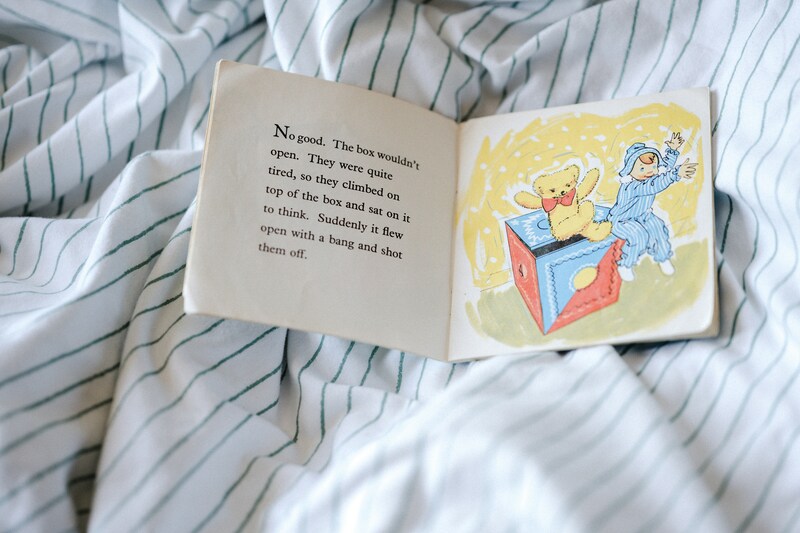
There is no requirement to divide your manuscript evenly across every page or spread. A 500-word manuscript does not need to become 25 words per spread just because the book has 20 text-bearing spreads.
Picture books depend on rhythm. Some moments need more text to establish a situation or move the plot forward. Others become stronger when the text gets out of the way.
You Don’t Need to Divide the Words Evenly
Imagine a story in which a child searches for a lost toy.
One spread might need several sentences to establish the search. The next could contain only:
“It wasn’t there.”
Then the following spread might have no text at all as the child discovers the toy somewhere unexpected.
This uneven distribution is not a problem. It can actually create a stronger reading experience.
When planning your manuscript, consider what each spread needs rather than assigning it a fixed number of words.
Some Pages Can Have No Words at All
Wordless pages and spreads can be particularly effective when the image can communicate something more powerfully than additional text.
They can be used for:
- dramatic reveals
- emotional moments
- action sequences
- visual humor
- transitions
- page-turn surprises
A wordless spread can also give readers a moment to study the illustration and make their own observations.
This is one reason a picture book should not be treated like a short story that happens to have pictures. The words and illustrations can divide the storytelling between them.
Let the Story Determine the Rhythm
Instead of asking, “How many words should go on this page?” ask, “What does the reader need to experience here?”
Some spreads may need text to move the story forward. Others may work better with a short line that creates anticipation before a page turn.
The rhythm can also change throughout the book. A quiet scene may use very little text, while a fast sequence may need several short lines.
The manuscript and pagination should eventually work together rather than forcing every spread into the same word-count formula.
What Actually Counts Toward Your Picture Book Word Count?
When calculating your narrative word count, focus on the actual story text rather than every piece of information included in your working manuscript.
Dialogue, repeated phrases, and sound effects generally count because they are part of what the reader will encounter as part of the story.
Does Dialogue Count?
Yes. Dialogue is part of the manuscript and contributes to the narrative word count.
For example:
“Where did you go?”
The sentence may be short, but it still counts.
This matters because dialogue can add words quickly, especially when several characters have extended conversations. In a picture book, every line should have a clear purpose. If an exchange can be shortened without losing character, conflict, or story information, it may be worth revisiting.
Do Repeated Phrases and Sound Effects Count?
Yes. Repeated phrases, refrains, and sound effects such as “Boom!” or “Whoosh!” are part of the text children read or hear, so they generally contribute to the manuscript’s word count.
Repetition itself is not something to eliminate simply because it adds words. Repeated language can create rhythm, anticipation, participation, and memorability.
The question is whether the repetition is doing useful work.
Do Illustration Notes Count?
Usually, illustration notes are treated separately from the story’s word count.
For example:
[Illustration: Lily runs through the forest while rain falls around her.]
This is a direction for the illustrator, not part of the narrative text that appears in the finished book.
That distinction becomes important when preparing a manuscript for submission or discussing the project with an illustrator. The story may be 600 words even though the working document contains additional illustration notes.
What About the Title, Dedication, and Back Matter?
The narrative word count normally refers to the main story.
Items such as the title, dedication, copyright page, author biography, glossary, author note, bibliography, captions, or other back matter should be considered separately rather than added to the core fiction word count.
This distinction becomes particularly important with nonfiction picture books, where supporting material can add substantial text beyond the main narrative.
Is 1,000 Words Too Long for a Picture Book?
For a contemporary fiction picture book, 1,000 words is on the longer side and may be difficult to fit comfortably into a standard picture-book structure. Many current publishing guides and professional discussions place contemporary fiction picture books closer to 300–800 words, with shorter manuscripts increasingly common.
But 1,000 words is not automatically a reason to reject a manuscript. The real question is why the story needs that many words.
When a Longer Picture Book Can Work
A longer manuscript may make more sense when the project has a specific reason for needing additional narrative space.
Examples include:
- an older target audience
- nonfiction subjects
- historical topics
- educational content
- biographies
- stories that genuinely require more narrative depth
Nonfiction, in particular, can use a larger amount of text because the book may include labels, captions, sidebars, glossary entries, author notes, or bibliography material.
When 1,000 Words May Be a Warning Sign
A 1,000-word manuscript is worth examining closely if it contains:
- too many scenes
- extensive backstory
- descriptions of things the illustrations could show
- long dialogue exchanges
- too many characters
- multiple subplots
For example, if the manuscript spends three sentences describing a character’s clothing, surroundings, and facial expression, ask whether those details could simply appear in the illustration.
A picture book has two storytelling tools. If the text is doing all the visual work, the manuscript may be carrying more words than it needs.
What If My Picture Book Is 1,500 or 2,000 Words?
A 1,500- or 2,000-word manuscript does not necessarily mean the story is bad or unusable. It may mean the story needs a different approach.
Before cutting hundreds of words at random, identify what is making the manuscript long.
Option 1: Edit the Story Down
If the story itself is appropriate for a picture book but the writing is verbose, editing may solve the problem.
Look for sentences that repeat information, unnecessary explanations, weak openings, or dialogue that can be shortened.
The goal is not to remove words until you reach 500. The goal is to make every remaining word useful.
Option 2: Let the Illustrations Carry More of the Story
Look through the manuscript for information that readers could understand by looking at the artwork.
A sentence such as:
“Lily wore her yellow raincoat and red boots as she walked through the rainy forest.”
could potentially become:
“Lily hurried into the forest.”
If the yellow raincoat, red boots, rain, and forest will all be clearly visible in the illustration, the longer sentence may be explaining information that does not need to be verbalized.
Option 3: Consider a Different Book Format
Sometimes the problem is not the manuscript. The format may simply be a mismatch.
A story of 1,500–2,000 words might be better suited to an:
- early reader
- illustrated storybook
- chapter book
The intended reading experience should help determine the format, rather than forcing every story into a standard picture-book structure.
Option 4: Consider Whether You Have More Than One Story
A long manuscript may contain more than one story arc.
Perhaps the first half is about a character overcoming one problem, while the second half introduces a new conflict with its own resolution.
Separating those arcs may reveal two shorter stories rather than one oversized picture book.
How Can I Reduce the Word Count Without Losing the Story?
Cutting words works best when you protect the story’s emotional core while removing information the reader does not need.
Remove What the Illustration Can Already Show
This is often one of the easiest places to start.
If the illustration will clearly show a character’s clothes, surroundings, physical movement, or facial expression, the text does not always need to describe them.
The question to ask is simple:
Does the reader need these words, or will the picture already communicate this information?
Cut Repeated Information
Look for places where the same emotion, fact, or plot point appears multiple times.
If readers already understand that a character is frightened, another sentence explaining the same fear may not add anything.
Instead, let the character’s action, dialogue, or the next illustration deepen the emotion.
Shorten Dialogue
Picture-book dialogue usually needs to move the story, reveal character, create conflict, or produce a meaningful emotional beat.
If two characters exchange several lines that communicate essentially the same thing, see whether the conversation can be compressed.
Shorter dialogue can also leave more room for the illustration and make page turns easier to manage.
Remove Unnecessary Backstory
Not every detail about a character’s history needs to appear in the book.
Ask whether the information changes what happens in the story. If it does not, it may belong in your notes rather than the manuscript.
Keep the Emotional Core
Editing should not become a word-count exercise.
Before cutting a sentence, consider whether it establishes motivation, develops conflict, builds character, or delivers the emotional payoff.
The objective is not simply a shorter manuscript. It is a manuscript in which the important parts have more room to work.
What Should Be Written and What Should Be Shown in the Illustration?
A strong picture book does not require the text and illustration to repeat exactly the same information. Instead, they can complement each other.
Let the Text Tell What We Cannot See
Text is particularly useful for information such as:
- internal thoughts
- important dialogue
- information necessary to understand the plot
- character voice
- language and wordplay
These are things an illustration may not be able to communicate with the same precision.
Let the Illustration Show What We Can See
Illustrations can communicate:
- clothing
- environment
- facial expressions
- body language
- physical action
- visual jokes
- background details
This is where the visual side of the book can add information rather than simply decorate the page.
Avoid Saying the Same Thing Twice
Consider this example:
“Ben was terrified.”
If the illustration already shows Ben trembling behind a chair while looking at a giant dog, the sentence may simply repeat what the reader can see.
The text could instead contribute something different, such as what Ben is thinking or what he decides to do next.
That creates a richer relationship between words and images.
Does Rhyming Change the Ideal Picture Book Word Count?
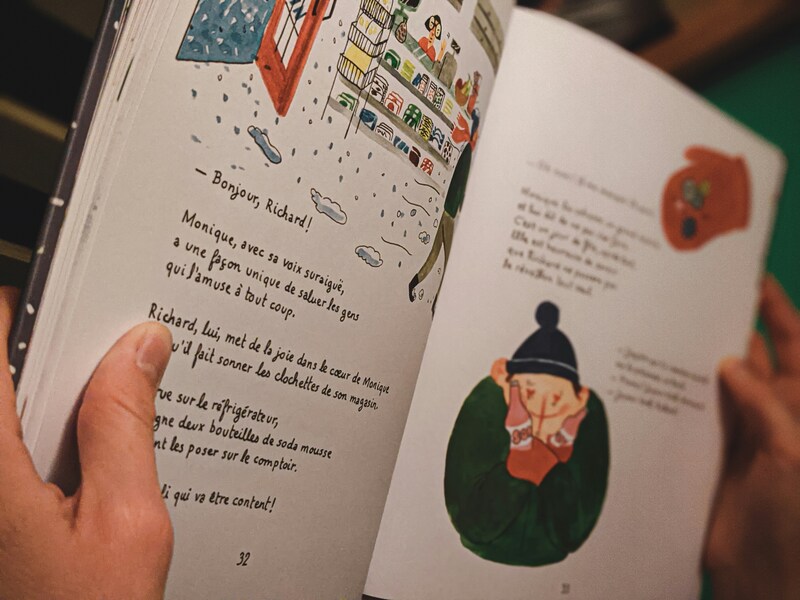
Rhyming picture books still need to be concise. In fact, rhyme can make a manuscript feel longer because the author may need additional words to maintain the rhythm or rhyme pattern.
For many rhyming manuscripts, a range around 200–500 words is commonly discussed as a practical target, although the appropriate length depends on the story, audience, and structure.
Don’t Add Words Just to Make the Rhyme Work
A forced rhyme can introduce unnecessary words, awkward phrasing, or sentences that exist mainly to complete a rhyme.
If a line requires several extra words that do not move the story forward, reconsider the line rather than automatically keeping it.
Natural rhythm and clear storytelling matter more than preserving a rhyme at any cost.
Do Nonfiction Picture Books Follow the Same Word Count Rules?
Not necessarily. Nonfiction picture books often have more flexibility because the text can serve several different functions.
A nonfiction book may include:
- a main narrative
- labels
- captions
- sidebars
- glossary entries
- author notes
- bibliography or other back matter
A nonfiction picture-book manuscript can therefore reach 800–2,000+ words without automatically being too long.
Picture-book biographies and educational books may require additional context that fiction does not.
The important distinction is between the main narrative and supporting information. A 1,200-word nonfiction project is not necessarily comparable to a 1,200-word contemporary fiction manuscript.
Does Word Count Affect the Illustrations?
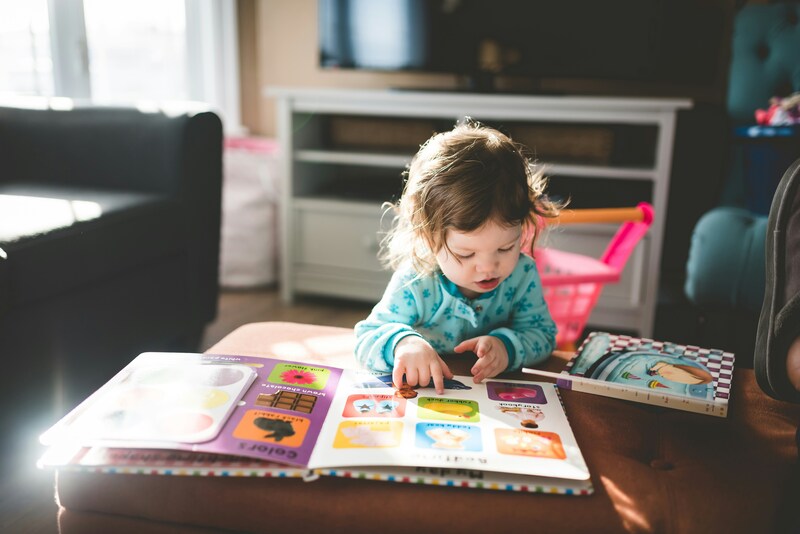
Yes. Word count can affect illustration decisions, particularly when text is placed directly within or around the artwork.
The more text a spread needs to accommodate, the more carefully the illustrator may need to plan composition and negative space.
More Text Means Less Visual Space
Text takes up physical space.
If a spread contains several paragraphs, the illustration cannot simply fill every available area. The artwork needs to leave appropriate space for the copy while keeping the composition readable.
This becomes especially important when the design relies on full-bleed illustrations.
Word Count Can Affect Composition
An illustrator may intentionally position characters or objects away from an area where text will appear.
For example, a character may be placed toward one side of a spread so the opposite side has enough negative space for a sentence or paragraph.
If the amount of text changes substantially, that composition may no longer work as originally planned.
Major Text Changes Can Affect Finished Artwork
This is one reason authors should stabilize the manuscript before final illustration begins.
A significant rewrite can change:
- page breaks
- scene length
- character actions
- text placement
- illustration composition
- pacing
- the amount of artwork needed
A small wording change may be easy to accommodate. A major change to the story can require the visual plan to be reconsidered.
Should My Manuscript Be Edited Before Illustration Begins?
Yes, your manuscript should ideally be stable before final illustration begins, but it does not need to be absolutely perfect in every word.
Small wording changes can often be managed. Major changes to the plot, characters, setting, or page structure are much more complicated once sketches, layouts, or final artwork already exist.
The Story Should Be Stable, Not Necessarily Perfect
Before contacting an illustrator, you should have a clear version of the story that represents what you actually want illustrated.
That means the major elements should be settled:
- plot
- characters
- conflict
- ending
- approximate pagination
- overall story structure
You can still refine individual sentences afterward, particularly during editing and layout.
Why Major Rewrites Become Harder Later
Once visual development begins, the manuscript becomes connected to the artwork.
Changing a page break can affect a scene. Changing a scene can affect a character’s action. Changing the action can affect the composition. A large change in word count can also require text placement to be redesigned.
This is why manuscript preparation and illustration planning work best as connected stages rather than completely separate tasks.
If you are preparing to work with an illustrator, see What to Prepare Before Hiring a Children’s Book Illustrator for a more detailed look at manuscript readiness, character information, references, revisions, and deliverables.
A Quick Picture Book Word Count Checklist
Before considering your manuscript ready, ask these questions first:
- Is the language appropriate for my target age?
- Does every sentence move the story forward?
- Am I describing things the illustrator could show?
- Does each spread have a reason for the reader to turn the page?
- Are there places where the story could breathe visually?
- Is the manuscript long because the story needs it, or because I am overexplaining?
- Would another book format suit the story better?
If you can answer these questions confidently, you are evaluating the manuscript on more than word count alone.
Final Thoughts: Don’t Write to a Number
Word count is a useful guide, not the goal.
For contemporary fiction picture books, 300–800 words is a practical range to keep in mind, with 400–700 words often serving as a useful target. But a strong manuscript may fall outside that range when its audience, format, subject, or storytelling approach calls for it.
The better question is whether every word is earning its place.
A good picture book gives the text enough space to tell what words are best at expressing while leaving enough room for illustrations to communicate everything that does not need to be said.
Preparing your manuscript for illustration? You do not need to plan every visual detail yourself. An experienced children’s book illustrator can help explore how your words and illustrations work together across each spread, from visual pacing and character actions to composition and final artwork.